Short answer: WhatsApp is the main business chat app in Brazil and Mexico, so expect buyers to message you there. Answer Brazilians in Portuguese and everyone else in Spanish; don't send Spanish to Brazil. Latin America is 11 to 14 hours behind Malaysia: your 8pm to midnight is São Paulo's morning, and Mexico City starts work at 11pm your time. Write prices with a currency code, because "$" means pesos in Mexico, Colombia, Argentina and Chile, and most of the region uses a decimal comma (1.234,56). Expect voice notes, especially from Brazil. BlackCat SCRM translates Spanish and Portuguese both ways, turns received voice notes into translated text, and AI replies can answer common questions outside your hours.
Do Latin American buyers really use WhatsApp for business?
Yes, in the biggest markets it is the default. Survey data compiled by Statista from DataReportal shows WhatsApp used by 93.7% of Brazil's online audience (third quarter of 2024), and reaching 91.4% of internet users in Mexico, where it was also the favourite social platform (second quarter of 2025). In Brazil, the Panorama Mobile Time/Opinion Box surveys have found WhatsApp on almost every smartphone. For a supplier abroad, that means the first enquiry, the price discussion and the order confirmation will usually all happen in one WhatsApp chat.
Spanish or Portuguese: who speaks what?
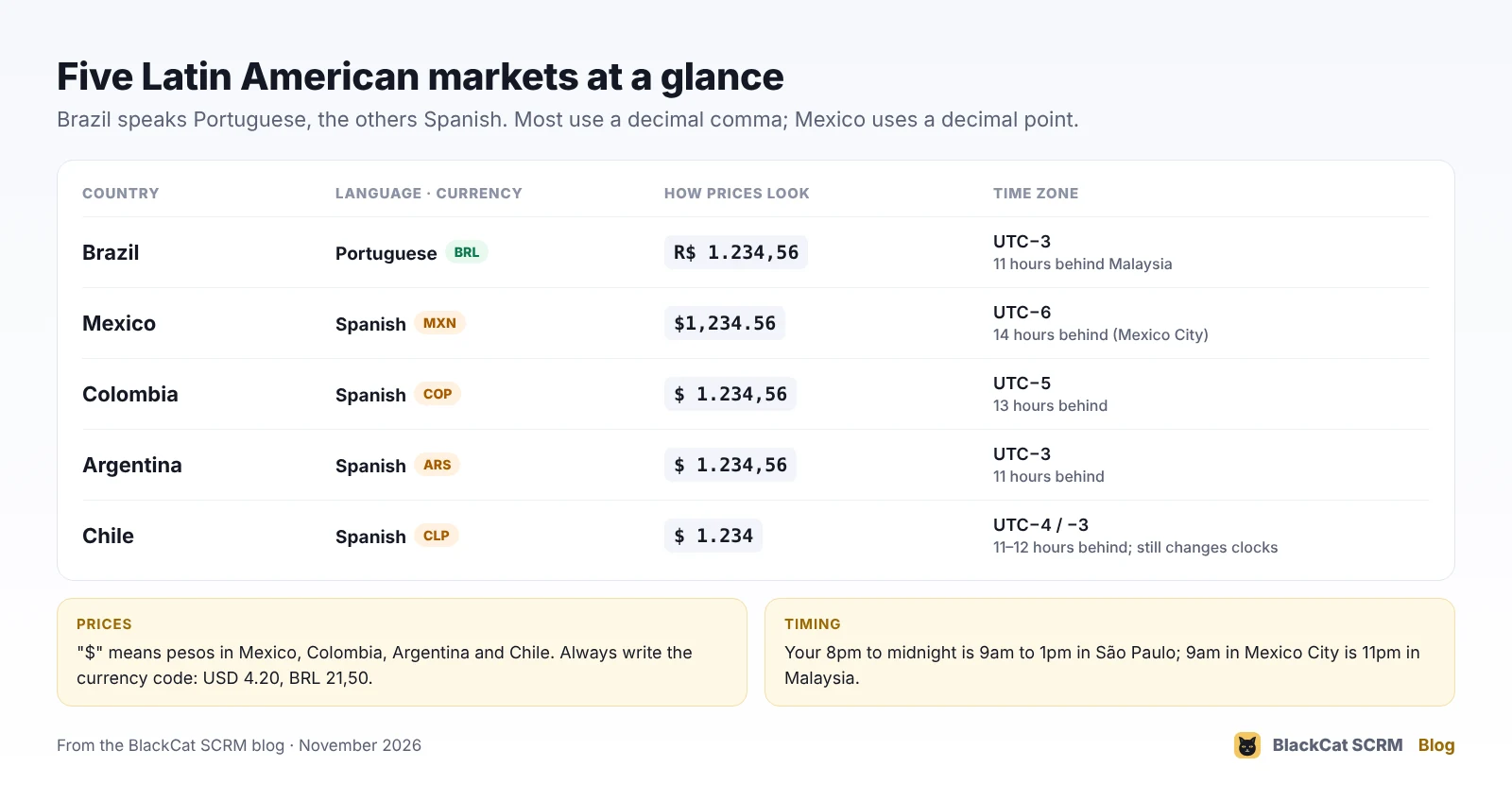
- Brazil speaks Portuguese, not Spanish. A Brazilian buyer will usually understand some Spanish, but replying in it reads as if you didn't check who they are. Match their language.
- The rest of the big markets speak Spanish, with local differences. Mexicans and Colombians often use usted in business; Argentines use vos among themselves. In writing, a polite neutral Spanish works everywhere; mirror the buyer if they're informal.
- Machine translation gives one Spanish and one Portuguese. Everyday sales chat comes through fine, but local words for products and sizes vary by country, so keep a short glossary of the terms your buyers actually use.
When can you actually reach them?
Latin America is a long way behind Malaysia. São Paulo and Buenos Aires are on UTC−3, 11 hours behind; Bogotá and Lima on UTC−5, 13 hours behind; Mexico City on UTC−6, 14 hours behind. Mexico stopped changing its clocks in October 2022 (except near the US border) and Brazil in 2019, so these gaps stay the same all year. Chile still changes its clocks, so check before booking a call.
- Brazil and Argentina: your 8pm to midnight is their 9am to 1pm. That's the window for calls and quick back-and-forth.
- Mexico: their 9am is your 11pm, and their afternoon is your early morning. Many teams answer Mexican buyers first thing in the morning, before the buyer's day ends.
- Overnight messages are normal. Answer them clearly the next morning, and make sure common questions get an answer even when nobody is awake (see after-hours customer service).
How should you write prices and dates?
- Always use a currency code. "$" means pesos in Mexico, Colombia, Argentina and Chile; Brazil uses R$ for reais. Write USD 4.20 or BRL 21,50, never just "$4.20".
- Watch the decimal separator. Brazil, Argentina, Colombia and Chile write 1.234,56; Mexico writes 1,234.56 like Malaysia. "4,20" from a Brazilian buyer means four point two, not four hundred and twenty.
- Write dates with the month in words: 15 Dec 2026. Latin America writes day/month/year, so 03/04 is 3 April, not 4 March.
- Payments: Brazilians pay each other with Pix, the central bank's instant payment system, which handled about 79.8 billion transactions in 2025. Pix is for payments inside Brazil, so say early how a buyer can pay you from abroad.
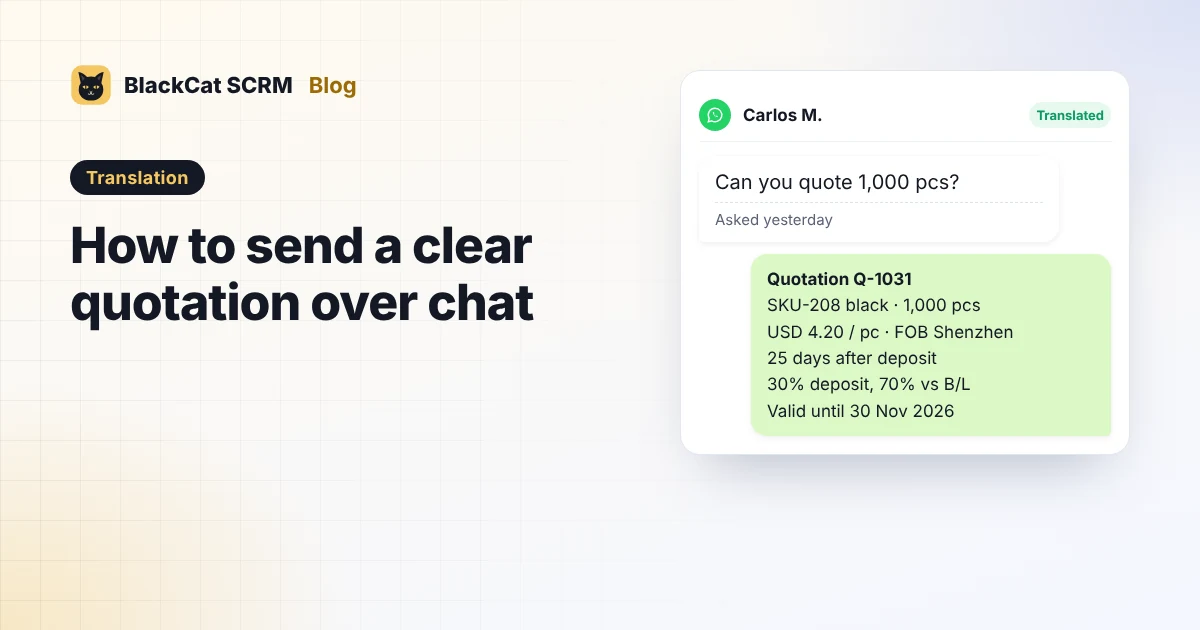
Our guide to sending a clear quotation over chat has an eight-line template that survives translation.
What about voice notes?
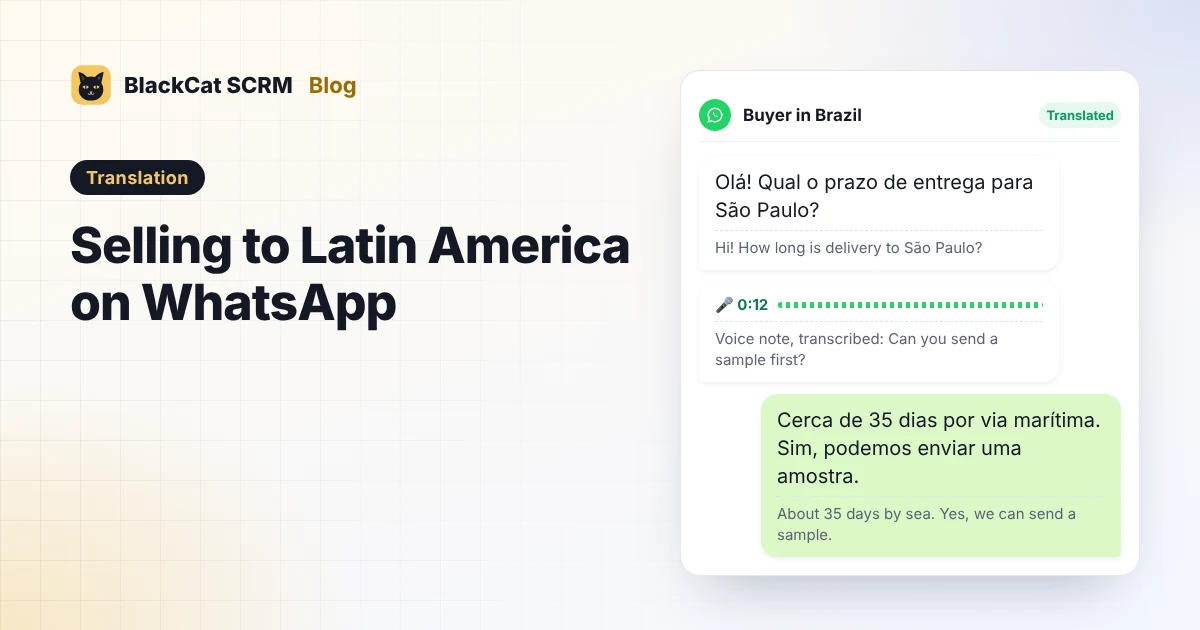
Expect a lot of them, especially from Brazil. A Panorama Mobile Time/Opinion Box survey reported by Tecnoblog found that about eight in ten Brazilian WhatsApp users communicate by audio message. A buyer may describe a product, a problem or an order in a 40-second audio rather than typing it.
You can't ask every buyer to type instead. Turn the voice note into text, reply in text, and repeat the key details (quantity, price, date) so both sides have them in writing.
What tone works on chat?
- Warm first, then business. A greeting and a friendly line before the price list is normal, and buyers often use first names quickly.
- Reply fast during their day. A message answered within their working hours goes a long way; a reply 14 hours later looks slow even if it's your morning.
- Be clear about lead times and shipping. Distance from Asia means long sea freight; say the days and the port up front so nobody is surprised.
- Follow up with something useful, such as a photo of the sample or a confirmed ship date, rather than "any news?" (see following up quiet buyers).
How does BlackCat SCRM help with Latin American buyers?
In BlackCat SCRM:
- Spanish and Portuguese translation, both ways, among 65 languages. Set it per account, or per customer, so one WhatsApp number can answer Brazilians in Portuguese and Mexicans in Spanish.
- Voice notes to text: turn on voice transcription in the translation settings, then click Transcribe or Translate under a received voice note to read it in your language (WhatsApp, Telegram, Messenger and Meta Business Suite).
- Quick replies for prices, lead times and payment details, set to translate before sending if you keep them in English or Chinese.
- AI replies (Pro and above) answer common questions from your knowledge base during your night, which is the Latin American working day, and hand over when unsure.
- Customer notes for each buyer's language, country, currency and what was quoted.
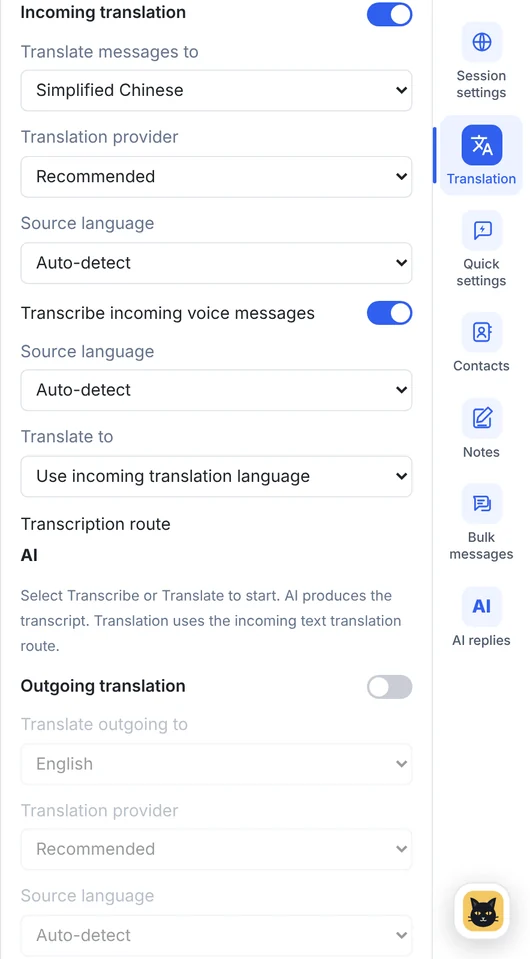
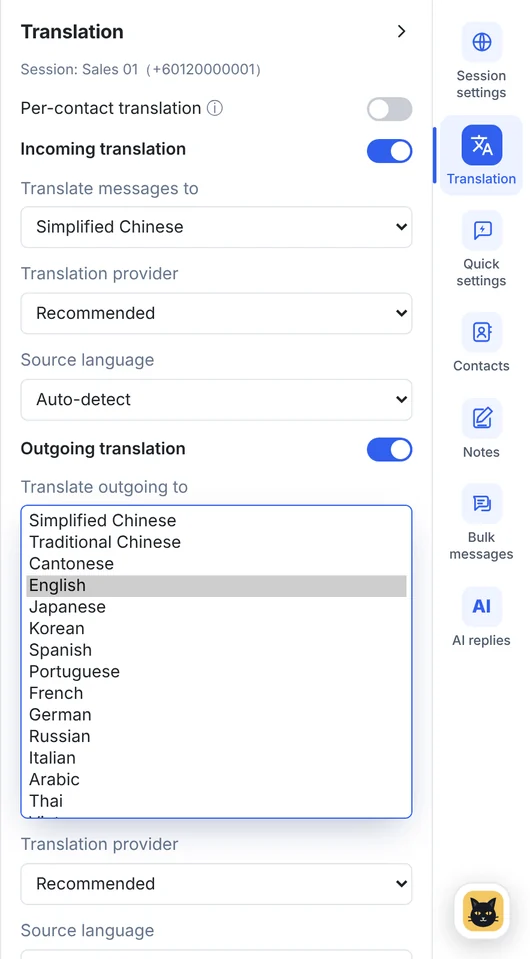
Honest limits: there's one Spanish and one Portuguese option, not separate Mexican, Argentine or Brazilian variants. Voice transcription uses AI points by the length of the voice note, voice notes you send aren't translated, and on personal Messenger a voice note has to be played once first. AI replies only run while BlackCat is open and the computer is online.
Sources
- Statista, using DataReportal and Meltwater data: most used social media platforms in Brazil (WhatsApp 93.7%, Q3 2024) and favourite social media in Mexico (WhatsApp reach 91.4%, Q2 2025).
- Tecnoblog: WhatsApp reaches 99% of phones in Brazil (Panorama Mobile Time/Opinion Box, including audio messages).
- Metrópoles: Pix sets a record in 2025 (Banco Central do Brasil figures).
- Bloomberg Línea: Mexico abolishes daylight saving time; Wikipedia: daylight saving time in the Americas (Brazil 2019, Chile).
- BlackCat SCRM user guide: translation, voice transcription, quick replies, AI replies and customer notes.
FAQ
Should I reply to Brazilian buyers in Spanish?
No. Brazil speaks Portuguese. Many Brazilians understand some Spanish, but a Portuguese reply shows you know who you're talking to.
What time should I message buyers in Brazil and Mexico from Malaysia?
Brazil is 11 hours behind Malaysia, so your 8pm to midnight is their morning. Mexico City is 14 hours behind: their 9am is your 11pm, and their afternoon is your early morning.
How do I write prices for Latin American buyers?
Use a currency code (USD, BRL, MXN) rather than "$", which means pesos in several countries, and remember that most of the region writes 1.234,56 with a decimal comma.
Can BlackCat translate Portuguese voice notes?
Yes. Turn on voice transcription in the account's translation settings and click Transcribe or Translate under a received voice note, on WhatsApp, Telegram, Messenger and Meta Business Suite. It uses AI points by the length of the voice note.