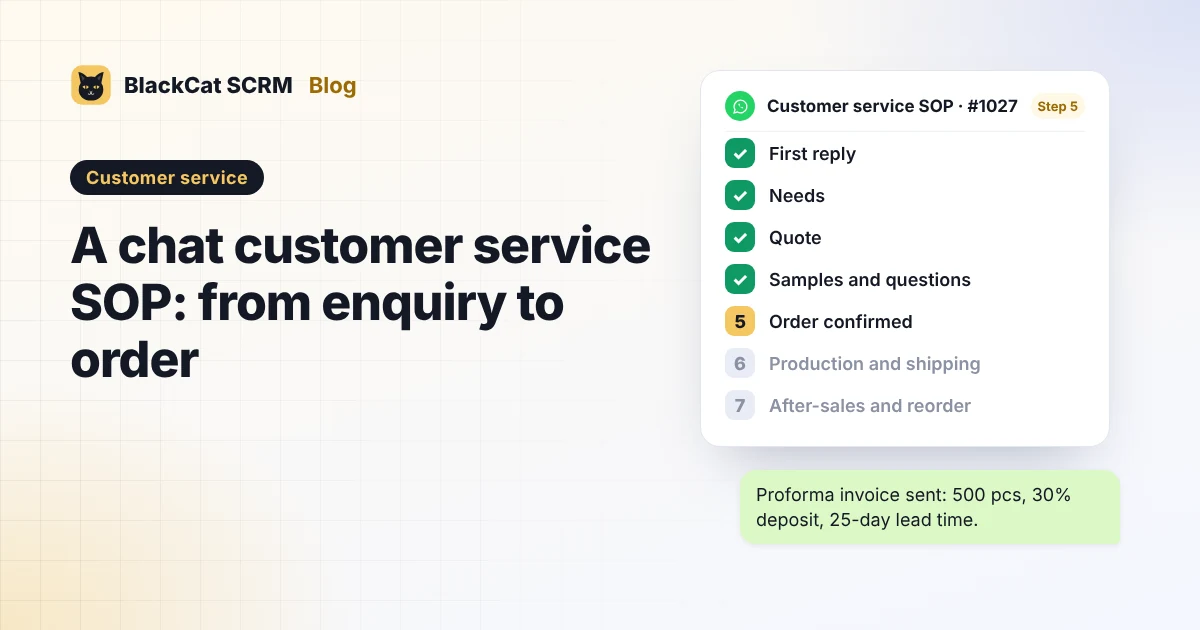
Short answer: write your chat process as seven stages (first reply, needs, quote, samples and questions, order confirmed, production and shipping, after-sales) with a target time and the notes to keep at each one. Set a first-reply target for working hours, decide what only a manager may answer (discounts, complaints, refunds), turn each stage into a quick reply group, and review a few real chats every week. BlackCat SCRM puts all your chat accounts in one window with quick replies, customer notes, translation and AI replies, but it has no ticket assignment, timers or reports, so the SOP itself is still yours to run.
Why does a chat team need an SOP?
Chat feels informal, so most teams never write their process down. The cost shows up later: replies that depend on who is on shift, prices quoted from memory, and a new hire who learns by copying whoever sits next to them. An SOP (standard operating procedure) is simply the agreed way your team handles a chat from the first message to the reorder.
Speed is the part buyers notice first. In a Harvard Business Review study of how 2,241 US companies answered web enquiries, firms that responded within an hour were nearly seven times as likely to qualify the lead as those that took even one hour longer, and 23% of the companies never responded at all. That was web leads in 2011, not WhatsApp, but anyone who sells on chat knows the pattern: the buyer has messaged three suppliers, and the first useful answer usually wins the conversation.
What are the stages from enquiry to order?
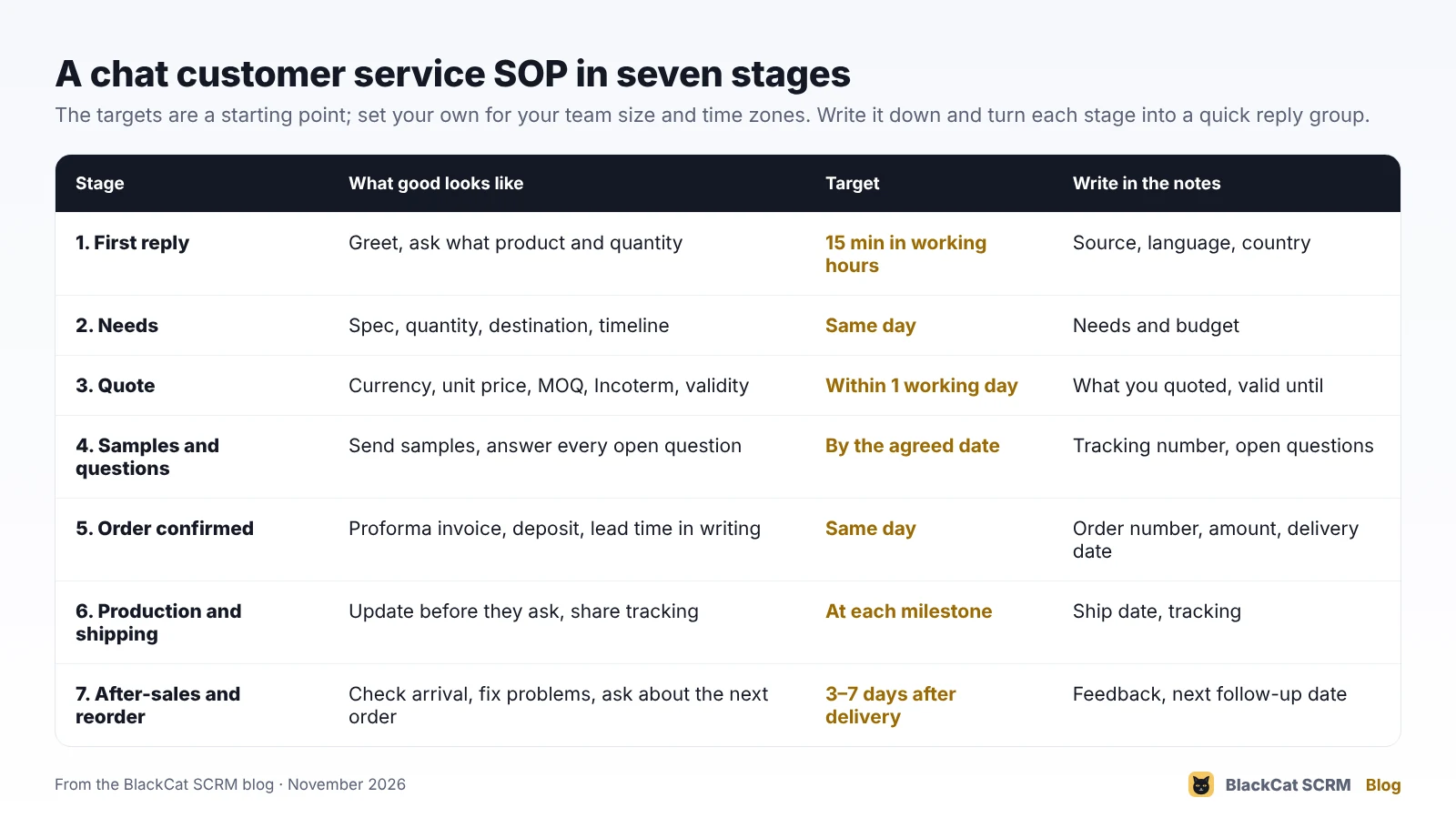
- First reply. Greet the buyer and ask the two questions that matter: which product and roughly what quantity. Set a target for working hours, such as 15 minutes.
- Needs. Specification, quantity, destination and when they need it. Don't quote before you know where the goods are going.
- Quote. Currency, unit price, minimum order, Incoterm (FOB, CIF and so on) and how long the price is valid. End with one clear next step.
- Samples and questions. Send samples or extra photos, and keep a list of open questions until every one is answered.
- Order confirmed. Proforma invoice, deposit and delivery date, confirmed in writing in the chat. A thumbs-up emoji is not an order.
- Production and shipping. Update the buyer before they ask: production started, goods ready, shipped with the tracking number.
- After-sales and reorder. A few days after delivery, check the goods arrived in good condition, fix any problem, and ask when they'll need the next batch.
For the messages at each stage, see our quick reply templates for export sales. For buyers who stop replying after the quote, see how to follow up without being pushy.
What response times should we set?
There's no universal number; pick targets your team can actually keep, then measure yourself against them for a month. A reasonable start for a small export team:
- First reply: within 15 minutes during working hours.
- Quote: within one working day once you have the details, or a message saying when it will come.
- Outside working hours: an automatic message that says when a person will reply. The WhatsApp Business app has away messages you can schedule for outside your business hours, and a chat tool's AI replies can answer simple questions overnight.
- Buyers in other time zones: agree who covers which hours, rather than everyone checking their phone at midnight.
Who handles what?
Write down what anyone on the team may answer and what goes to a named person. A common split:
- Anyone: product information, standard prices, MOQ, lead times, shipping options, order status.
- Sales lead or manager: discounts, special payment terms, exclusive distribution, large or unusual orders.
- Manager only: complaints about quality, refunds and anything with legal or reputational risk.
When a chat moves to someone else, the person handing over writes a two-line note: where the deal stands and what the buyer is waiting for. The buyer should never have to repeat themselves.
How do we roll it out without a big project?
- Put it on one page. The seven stages, the targets and the "who handles what" list. If it doesn't fit on a page, nobody will read it.
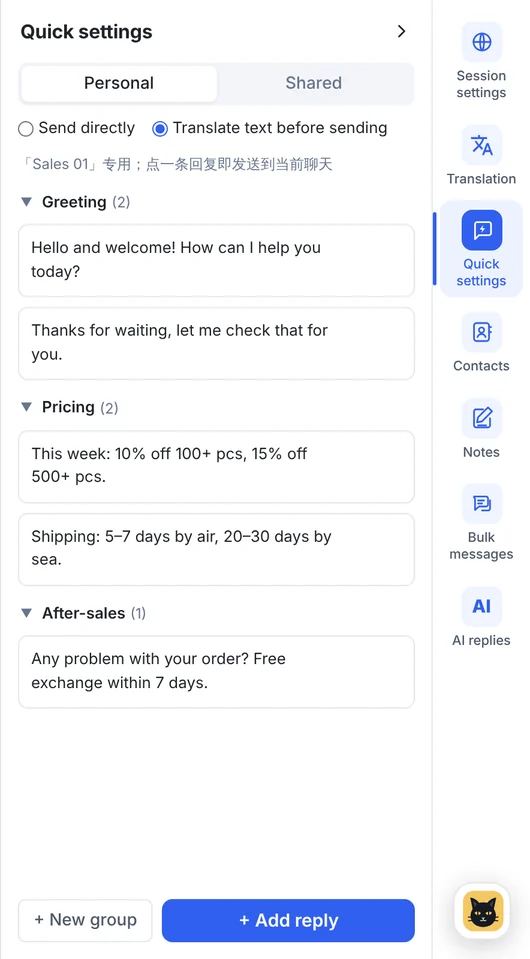
- Turn each stage into a quick reply group, so following the SOP is the easiest way to reply.
- Agree what goes in the notes at each stage, using the right-hand column of the table above.
- Review five real chats every week. Look for slow first replies, quotes missing a validity date, and promises nobody kept. Fix the SOP, not just the person.
- Update it monthly as prices, products and questions change.
Where does BlackCat SCRM help, and what doesn't it do?
BlackCat SCRM is a Windows app that runs many WhatsApp, Telegram, LINE, Messenger, TikTok, Zalo and X accounts in one window. For an SOP like this one:
- All accounts in one window, each in its own session, with unread counts, pop-ups and a message sound per account, so first replies don't wait because a phone was in someone's bag.
- Quick replies in groups, personal or shared across the team, so each SOP stage has its ready-made messages, with attachments.
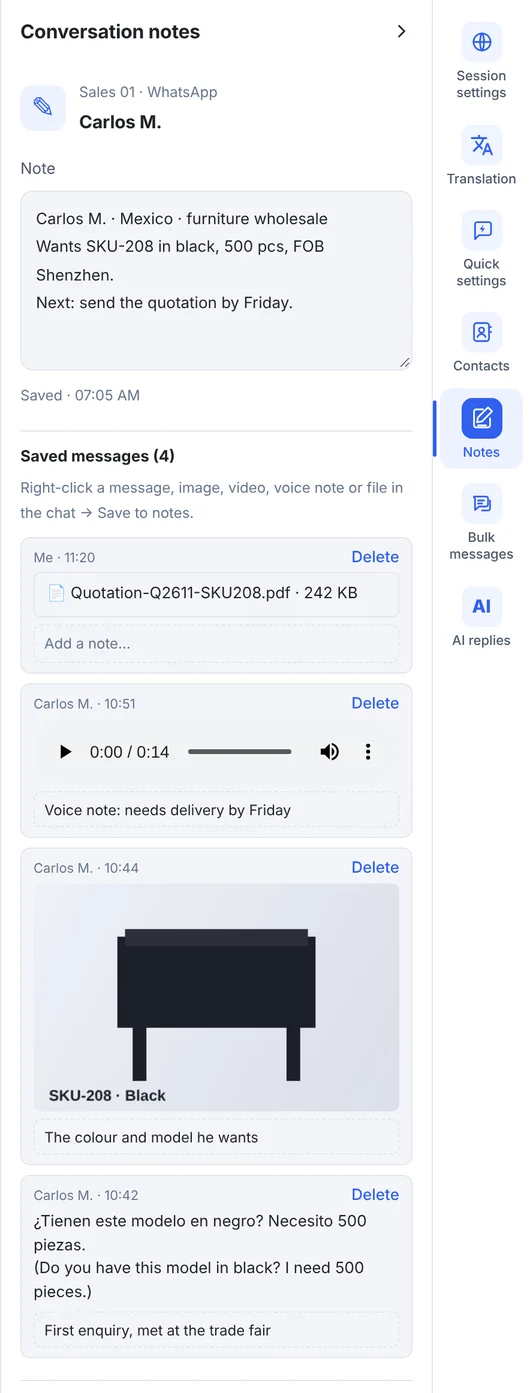
- Customer notes beside each chat for the stage, the quote and the next step. On WhatsApp, Telegram and Messenger you can save a message or file into the notes.
- Translation in 65 languages, so the same SOP works for buyers in any market.
- AI replies (Pro and above) answer new messages from your own knowledge base, with a daily limit you set, and hand over to a person when unsure. BlackCat Assistant can read a chat and suggest 2–3 replies.
Honest limits: BlackCat doesn't assign chats to people, time your responses, remind you about follow-ups or report on response times. Agree who covers which accounts, and use a weekly chat review to check the targets. Translation, quick replies, notes and AI replies work on WhatsApp, Telegram, LINE and Messenger; TikTok, Zalo and X give you the account session with unread counts and alerts. See what works on each platform.
Sources
- Harvard Business Review: The Short Life of Online Sales Leads (Oldroyd, McElheran and Elkington, March 2011; an audit of 2,241 US companies).
- WhatsApp Help Center: How to use away messages, How to use quick replies and How to use labels (WhatsApp Business app).
- BlackCat SCRM user guide: accounts, quick replies, customer notes, translation and AI replies.
FAQ
How long should a chat customer service SOP be?
One page. The stages, the response targets, who handles what and what to record in notes. Put the actual messages in quick replies rather than in the document.
What is a good first response time on WhatsApp?
For sales enquiries, aim for minutes rather than hours during working hours; 15 minutes is a common starting target. Outside working hours, an away message or AI reply should say when a person will answer.
Can BlackCat SCRM assign chats or track response times?
No. It puts every account in one window with unread counts and alerts, quick replies, notes, translation and AI replies, but there's no assignment, timer or response-time report. Agree who covers which accounts and review chats weekly.
Should the SOP be different for each market?
Keep one set of stages and adjust the details: working hours for time zones, language, and local habits such as payment methods. Translation lets one set of quick replies serve buyers in many languages.